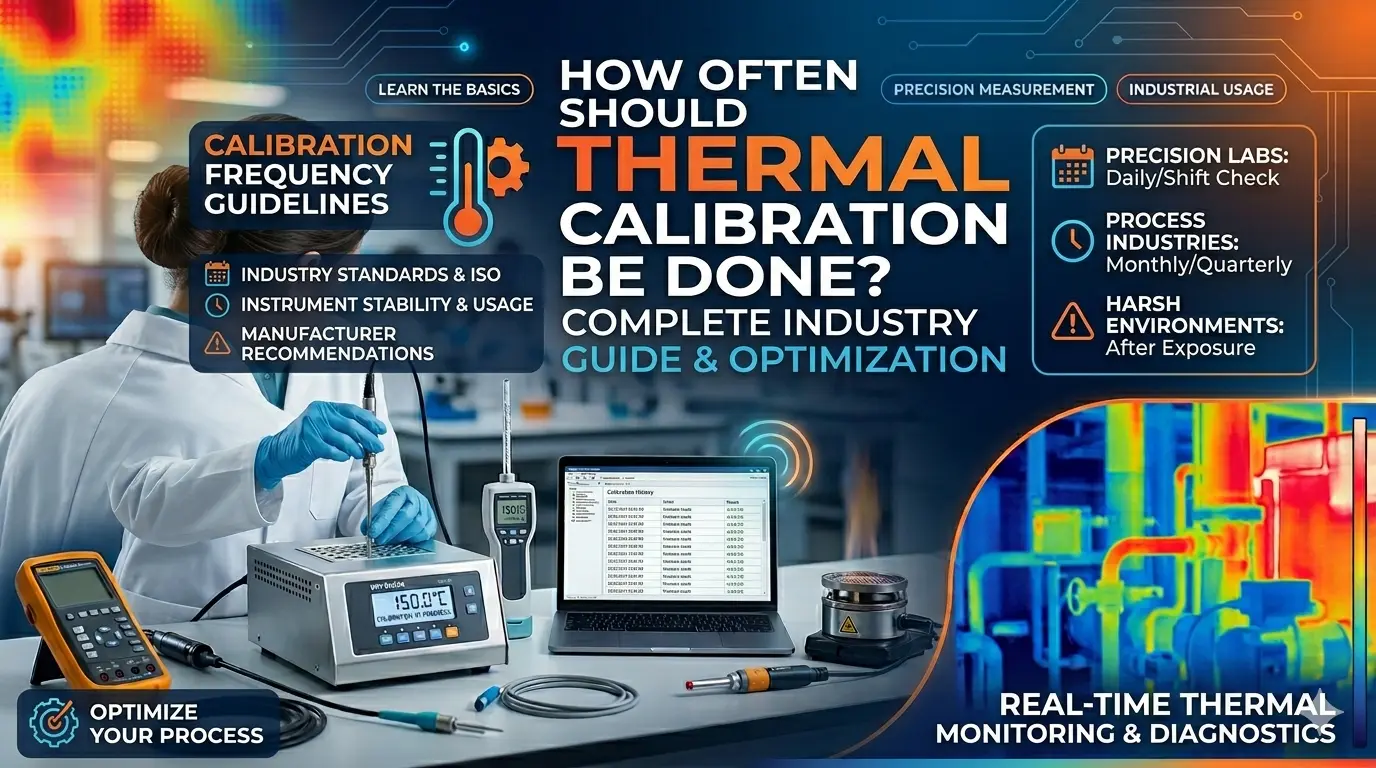
One of the most common questions businesses ask is: “How often should thermal calibration be performed?”
There’s no one-size-fits-all answer. The calibration frequency depends on how critical your processes are, how often instruments are used, and the industry standards you must follow.
In this guide, we’ll break down everything you need to know about thermal calibration intervals so you can maintain accuracy, quality, and compliance.
Why Calibration Frequency Matters
Thermal calibration is not just a one-time task—it’s an ongoing requirement. Over time, temperature instruments can drift from their original accuracy.
If calibration is not done regularly, it can lead to:
- Incorrect temperature readings
- Product quality issues
- Process failures
- Compliance risks
- Increased operational costs
Regular calibration ensures your instruments continue to perform reliably.
General Rule: Recommended Calibration Frequency
Although the exact timing varies, here are some common guidelines:
- Every 6 to 12 months → Standard recommendation for most industries
- Every 3 to 6 months → For critical or high-precision applications
- Annually (once a year) → For low-risk or less frequently used instruments
However, these are just general practices. The actual frequency depends on multiple factors.
Key Factors That Decide Calibration Frequency
1. Usage Frequency
Instruments used daily or continuously require more frequent calibration compared to rarely used devices.
2. Industry Requirements
Certain industries like pharmaceuticals and food processing, follow strict regulatory guidelines that define calibration intervals.
3. Accuracy Requirements
If your process demands high precision, calibration must be done more often.
4. Environmental Conditions
Exposure to heat, humidity, dust, or vibrations can affect instrument performance, requiring more frequent checks.
5. Instrument Stability
Some devices are more stable and retain accuracy longer, while others drift quickly.
6. Past Calibration History
If previous calibration reports show frequent deviations, you should shorten the calibration cycle.
Industry-Wise Calibration Frequency Guide
Pharmaceutical Industry
- Typically every 3 to 6 months
- Strict regulations require consistent accuracy
Food & Beverage Industry
- Every 6 months or as per safety standards
- Critical for hygiene and temperature-sensitive storage
Manufacturing Industry
- Usually 6 to 12 months
- Depends on process sensitivity
Healthcare & Laboratories
- Every 3 to 6 months for precision equipment
- Essential for testing accuracy
HVAC & Building Systems
- Once a year is generally sufficient
- More frequent if used in critical environments
Signs That Your Instrument Needs Calibration
Even if you follow a schedule, watch out for these signs:
- Sudden fluctuations in readings
- Results not matching expected values
- Equipment exposure to shock or damage
- After repair or maintenance
- Failed audits or quality checks
If you notice any of these, calibration should be done immediately.
What Happens If You Skip Calibration?
Ignoring calibration can lead to serious consequences:
- Product rejection or recalls
- Safety hazards
- Financial losses
- Legal or compliance issues
- Loss of customer trust
In critical industries, even a small temperature error can have major impacts.
Best Practices for Thermal Calibration Scheduling
- Maintain a proper calibration log
- Follow industry standards and guidelines
- Use certified calibration services
- Set automated reminders for due dates
- Analyze past calibration data to optimize frequency
Conclusion
Thermal calibration frequency depends on your industry, usage, and accuracy requirements—but regular calibration is non-negotiable.
A well-planned calibration schedule helps ensure reliable measurements, better product quality, and smooth compliance with industry standards.
Instead of asking “How often should I calibrate?”, the better question is: “What calibration schedule ensures my process stays accurate and reliable?”
.png)